
Construction loans.

RENOVATING, REBUILDING OR STARTING FRESH
Turn your building plans into reality.
A construction loan is a specialised mortgage intended for the development or refurbishment of properties. Rather than disbursing the full loan amount at once, the lender provides funds incrementally. This draw-based approach reduces interest costs during the build phase and adapts to your builder’s schedule and invoice timing.
As an independent Melbourne mortgage broker, we compare lenders and help manage the process so you can focus on construction rather than financing.
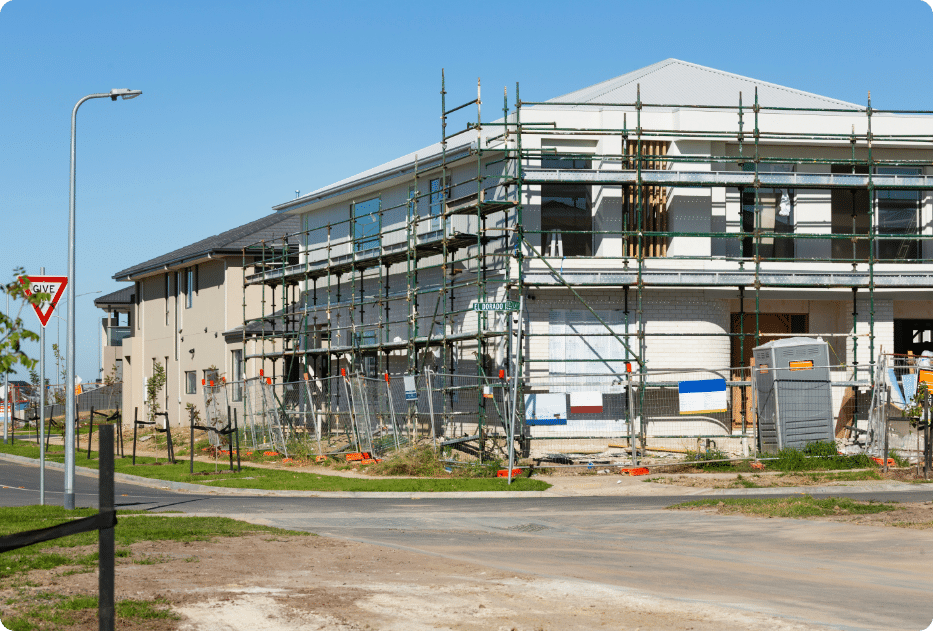
How construction loans work?
Construction loans operate on a draw schedule tied to physical completion milestones rather than releasing funds all at once. Your builder completes work, submits invoices, and the lender disburses funds to cover those costs. You’re charged interest only on what’s been drawn, not the full loan amount. When the build concludes and your home receives a completion certificate, you refinance into a standard mortgage and start regular repayments.
What are the advantages of building this way?
Preserve your cash flow
Staged disbursements mean your borrowing grows with your construction costs. You avoid paying interest on funds sitting idle, making construction loans more economical than borrowing the full amount upfront and holding it in a bank account.
Quality assurance protection
Each draw can trigger a lender inspection, ensuring work meets building standards and contracts are being fulfilled. This independent oversight protects you against shortcuts or unfinished work before paying invoices.
Manage construction variables
Timelines slip, weather delays happen, and variations occur. Construction loans accommodate these realities with adjustable draw schedules. You’re not forced to refinance prematurely or penalised for realistic build delays.
Clear transition to ownership
Moving from a construction loan to a home loan happens only after your home is certified complete.

Ready to Talk? Your Build Starts With the Right Loan.
Talk to usWho qualifies for construction loans?
Lenders assessing construction loan applications typically evaluate three elements.

Your financial position
- Demonstrated income stability and a credit profile that shows reliable repayment history
- Deposit of 10–20% of the total construction cost, sometimes less with strong equity or existing property
- Bank statements showing the capacity to cover interim costs or variations beyond the loan
- Proof that you can service interest payments during the construction phase

Your builder and project
- Licensed, registered builder with demonstrated building experience and local track record
- Approved plans and council permits confirming the project meets local regulations
- Professional valuation or quantity surveyor’s assessment of completed property value

Loan structure and terms
- Loan amount typically up to 80–90% of the completed property valuation
- Construction term matched to a realistic build schedule, typically 18–36 months
- Clear draw schedule aligned with construction stages and builder invoicing
- Commitment to refinance into a home loan upon completion of certification
Why choose Orange Home Loans?
SMSF loans involve more documentation, stricter compliance, and specialist lenders that most brokers don’t work with. Our team handles the complexity so you don’t have to, so why should you choose Orange Home Loans as your Mortgage Broker?

Multiple lender relationships
We maintain multiple partnerships with lenders that actively finance construction projects, from major institutions to specialist non-bank providers. This competition drives better terms and faster approvals for your build.

Independent assessment and advice
No allegiance to any single lender means you get honest guidance on your project’s financability and the loan structure that best suits your timeline and budget.

Local Melbourne knowledge
Operating from Moonee Ponds, we understand local council requirements, typical build timeframes in our region, and builder reputations. This local context improves application outcomes and reduces surprises during your build.
Construction loans:
Frequently asked questions.

Construction loans:
Frequently asked questions.
What exactly is a construction loan used for?
Construction loans finance the cost of building a new residential property, releasing funds in stages as construction progresses. Costs covered include labour, materials, council fees, and builder margins. Funds are drawn against completed work and builder invoices, ensuring money flows only as construction advances.
How many draws can I access during construction?
Draw frequency varies by lender and builder, typically ranging from 4 to 8 major draws over the construction period. Draws commonly align with foundation completion, frame erection, weatherproofing (lock-up), internal fit-out, and final completion. Your lender and builder agree on the draw schedule up front.
What happens if construction costs exceed the loan amount?
Construction contracts sometimes produce variations, design changes, unforeseen site conditions, or material price increases. If costs exceed your loan, you cover the difference from your own funds or negotiate additional borrowing with your lender. This is why financial reserves are important before starting a build.
Can I access funds before my builder needs them?
No. Construction lenders disburse only when the builder submits invoices and the work is certified complete. Funds cannot be drawn early for speculative reasons. This protects both you and the lender by keeping borrowing tied to actual construction progress.
What's the difference between construction and building insurance requirements?
Construction lenders require contract works insurance (covering the building during construction) and a defects liability insurance policy (protecting against builder defaults). These are mandatory, and your builder typically arranges them. Home and contents insurance applies only after you move in post-completion.
How is the completed property valued for refinancing purposes?
Once construction is certified complete, an independent valuer assesses the finished home. This valuation determines your loan-to-value ratio for refinancing into a home loan and confirms the property’s value for ongoing insurance and equity purposes. Valuations are typically ordered by your lender in the final stages of construction.
When should I start organising my refinance loan?
Begin refinancing discussions 4–6 weeks before your expected completion date. Your lender will order the final valuation, and once complete, you will receive formal approval for your home loan at locked-in rates. Early engagement prevents gaps between construction and home loan settlement.
What if my build takes longer than planned?
Construction loan terms accommodate delays through adjustable draw schedules. If your build extends beyond the initial timeframe, the loan term extends accordingly. Discuss timeline risks with your lender early; weather, council inspections, and material delays are common and expected in lending assessments.
Should I use a broker for construction financing?
Construction loans involve builder verification, progress inspections, draw coordination, and eventual refinancing, multiple complex steps. Brokers specialising in construction lending know which lenders are active, what documentation they require, and how to structure applications for faster approval. We manage the entire process, reducing your administrative burden and improving your outcome.